
Avoidance - Program
Module 2: The Cost of Avoidance
Introduction: Why We Need to Face the Cost
In Module 1, you explored what avoidance is, how it shows up in your life, and began identifying the areas where you may be sidestepping important but uncomfortable tasks. That foundation is crucial—awareness always comes first.
Now, in Module 2, we take the next step: understanding the cost of avoidance. Avoidance doesn’t just delay discomfort. It actively shapes your future, often in subtle ways you don’t notice until months or years later.
This module is designed to help you:
- Link avoidance directly to its life consequences in areas like health, money, relationships, and opportunities.
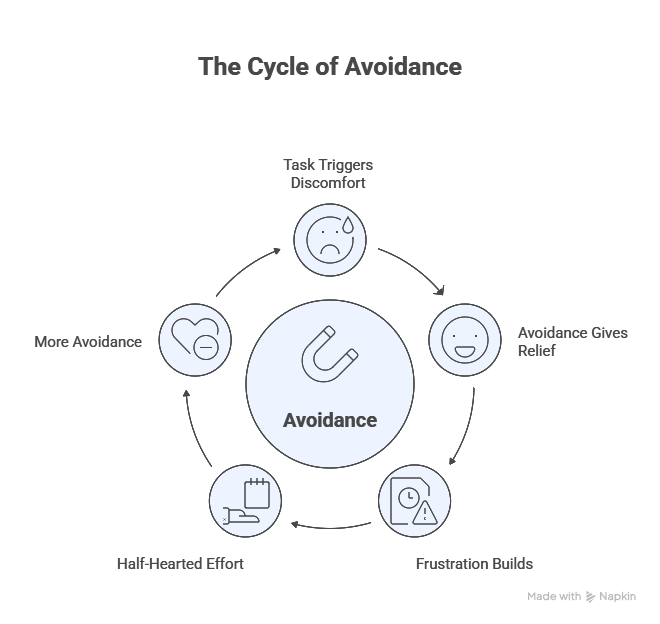
- Recognize the cycle of avoidance—how it fuels frustration, leads to half-hearted effort, and ultimately creates even more avoidance.
- Understand how avoidance doesn’t just cost you in terms of effort—it robs you of rewards, growth, and satisfaction.
- Build emotional clarity on why change truly matters, so you can commit more deeply to breaking free.
By the end of this module, you should feel the weight of avoidance—not to make you feel guilty, but to help you see that every act of avoidance is a decision with a price tag.
Part 1: Avoidance and Its Life Consequences
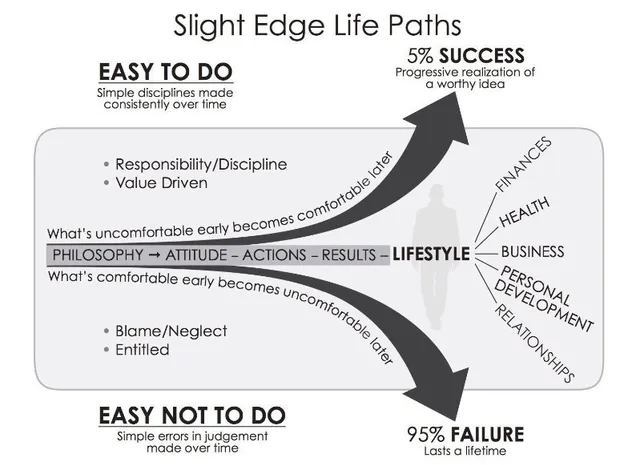
Avoidance rarely feels destructive in the moment. After all, when you put off that phone call, delay working on that report, or skip a difficult conversation, you usually feel short-term relief. But every time you avoid, you are making a trade:
- Short-term comfort vs. long-term cost.
Let’s explore how avoidance plays out in four key areas of life: health, money, relationships, and opportunities.
1. Health Consequences
Health is one of the easiest areas where avoidance shows up. Many people:
- Avoid going to the doctor for check-ups.
- Put off exercise because it feels uncomfortable.
- Delay making dietary changes because it requires effort and discipline.
In the moment, avoiding these tasks means less hassle, less effort, less discomfort. But over time, the consequences compound:
- Small health problems go unchecked and become serious.
- Lack of exercise contributes to fatigue, lower mood, and long-term disease risk.
- Poor diet creates a slow but steady decline in energy and wellbeing.
Avoidance steals vitality. You may not notice it day by day, but when you look back after a year, you may feel stuck in a body that no longer supports the life you want.
2. Financial Consequences
Money often triggers anxiety, and avoidance can become costly:
- Ignoring bills until they pile up.
- Avoiding budgeting because it feels overwhelming.
- Delaying conversations about salary, debt, or investments.
The short-term relief is real—you don’t have to think about the numbers. But the long-term costs are significant:
- Late fees, penalties, and interest charges.
- Lost opportunities to save, invest, or grow wealth.
- Stress that compounds as finances become harder to manage.
Avoidance steals financial freedom. What feels like escaping pressure today is actually building a heavier financial burden for tomorrow.
3. Relationship Consequences
Relationships thrive on communication, honesty, and presence. Avoidance undermines all three. Examples include:
- Avoiding difficult conversations with a partner.
- Putting off reconnecting with a friend or family member.
- Withdrawing instead of addressing hurt feelings.
The short-term benefit is avoiding conflict, tension, or discomfort. But the long-term outcome is erosion:
- Trust is weakened.
- Distance grows between people.
- Resentment builds beneath the surface.
Avoidance steals connection. Left unchecked, it can cost relationships altogether.
4. Opportunity Consequences
Opportunities often come with uncertainty, risk, or fear of failure. Avoidance keeps you safe but stagnant:
- Not applying for jobs or promotions.
- Delaying learning a new skill.
- Avoiding public speaking or leadership opportunities.
In the short term, avoidance saves you from potential rejection, embarrassment, or effort. In the long term, it costs you growth, advancement, and experiences that could transform your life.
Avoidance steals potential. Every avoided risk is also an avoided reward.
Reflection Prompt
👉 Take five minutes and list one example of avoidance in each area of your life (health, money, relationships, opportunities). Next to each, write what it’s costing you.
Part 2: The Cycle of Avoidance
Avoidance is rarely a single event—it often becomes a self-reinforcing cycle. The pattern looks like this:
- Task triggers discomfort.
You feel anxious, bored, overwhelmed, or fearful. - Avoidance gives relief.
You distract yourself, delay, or escape. You feel better for a moment. - Frustration builds.
The avoided task still looms, deadlines get closer, pressure increases. - Half-hearted effort.
When you finally engage, it’s rushed, sloppy, or under pressure. - More avoidance.
The poor results reinforce your belief that the task is unpleasant or that you’re “bad at it,” making you avoid even more next time.
This loop keeps you stuck. Each turn of the cycle strengthens the habit of avoidance and weakens your confidence.
Exercise: Mapping Your Avoidance Cycle
- Pick a task you often avoid.
- Write down:
- What discomfort does it trigger?
- How do you avoid it?
- How do you feel after avoiding?
- What happens when you finally do it (or don’t)?
- Draw the cycle and label each stage.
👉 Reflection: How many times have you already gone through this cycle in the last week?
Part 3: How Avoidance Robs You of Rewards
One of the most overlooked costs of avoidance is not just the extra effort later, but the missed rewards that come with action.
Think of it like this:
- Every avoided workout is not just lost fitness, but lost confidence, energy, and pride.
- Every avoided conversation is not just delayed tension, but lost intimacy and understanding.
- Every avoided opportunity is not just protection from risk, but lost growth, income, and new connections.
Avoidance narrows your world. It reduces the richness of your life because you don’t give yourself the chance to reap rewards.
Visualization Exercise: Fast Forward 1–5 Years
Close your eyes and imagine:
- One Year Later: If you continue avoiding your chosen task, what does your life look like? How much more difficult will the task become? What emotional state will you likely be in?
- Five Years Later: Picture the longer-term consequences. What health, financial, relational, or career costs have compounded? What rewards have you missed out on?
👉 Journal for 5–10 minutes about what you saw. Don’t just think logically—describe the emotions of living that avoided life.
Part 4: Building Emotional Clarity
The brain doesn’t change through logic alone. You already “know” avoidance isn’t ideal. What’s missing is emotional clarity—a deep, felt sense that the cost of avoidance is greater than the comfort of relief.
This module is about helping you feel that truth. Every worksheet, reflection, and visualization is designed to make the long-term cost more real than the short-term relief.
Worksheet: Cost–Benefit of Avoidance
Take one avoided task and complete this table:
| Short-Term Benefits of Avoidance | Long-Term Costs of Avoidance |
|---|---|
| (e.g., I don’t feel anxious right now) | (e.g., anxiety grows worse over time) |
| (I can relax today) | (my future self will be overwhelmed) |
👉 Reflection: Looking at the table, is the trade-off worth it?
Part 5: Integrating the Learning
Avoidance is never neutral—it’s either building your future or eroding it. Module 2 is about seeing the erosion clearly so you can’t ignore it anymore.
Here’s how to integrate this learning:
- Choose one area of avoidance you identified earlier (health, money, relationships, opportunities).
- Do the cost–benefit worksheet for that area.
- Visualize 1–5 years ahead if nothing changes.
- Share your reflections with the group or a trusted accountability partner.
The more you articulate and share, the harder it is to keep living in avoidance unconsciously.
Closing Thought
Avoidance may feel like a small act in the moment, but over time, it’s one of the most expensive habits you can keep.
By bringing awareness to its true cost, you begin to loosen its grip. You may still feel discomfort when facing difficult tasks—but now you have a powerful motivator: the understanding that every avoided action is a choice to sacrifice your future.
In Module 3, we will shift from cost awareness into practical strategies for breaking the avoidance cycle and building new habits of engagement.
WORKSHEETS
(Google Drive – you should be able to access and download without signing in)
Worksheet: Integrating the Learning — Breaking the Avoidance Cycle (PDF / DOC)
Avoidance is never neutral — it is either building your future or eroding it. Module 2 is about seeing the cost of avoidance clearly so that it can no longer be ignored. This worksheet helps you integrate your learning and take concrete action.
Worksheet: Cost–Benefit of Avoidance (PDF / DOC)
This exercise helps you see clearly the trade-offs of avoidance. Often, avoidance provides short-term relief but comes with long-term costs that quietly accumulate. By writing them down, you can make conscious choices about where to take action.
Contrast Visualization Worksheet: Avoidance vs. Taking Action (PDF / DOC)
This exercise helps you see and feel the difference between continuing avoidance and taking deliberate action. Comparing these two futures side by side strengthens motivation and emotional clarity, making it easier to commit to change.
Exercise: Mapping Your Avoidance Cycle (PDF / DOC)
Avoidance often feels like it “just happens,” but in reality, it follows a predictable cycle. By mapping this cycle, you can begin to see the repeating pattern that keeps you stuck — and start noticing where you can break it.
Exercise — Reflection Prompt: The Cost of Avoidance (PDF / DOC)
This exercise helps you see how avoidance shows up in different areas of your life and what it is quietly costing you over time.
Often, we underestimate the impact of avoidance because we focus only on the short-term relief. This worksheet will make the real cost visible.
