General
Reading the Signs: Learning to Tell the Signal from the Noise
How a Disappointing Monday Morning Became This Week’s Biggest Lesson
This morning didn’t start the way I wanted it to. It was my regular Monday morning weigh-in, and after a full week of sticking to my exercise plan, staying on top of my diet and nutrition, I stepped on the scale expecting to see a reduction. Instead, the number had gone up.
There was a real moment of disappointment there — the kind that comes from putting in consistent effort and getting a result that feels like the total opposite of what you expected.
But instead of letting that disappointment sit, I turned it into something useful. And that’s really the theme for this week: learning how to read the signs life is giving you.
The Sign That Started It All
While I was stretching this morning, trying to process that weigh-in, a song came into my head — The Sign by Ace of Base. It opens with the line, “I saw the sign.”
That got me thinking. This week is about reading the sign — learning to differentiate between the signal and the noise, and understanding that one sign is never the whole story.
A single measurement is just data. It’s the wider pattern, tracked over time, that reveals the truth. I know the process I’m following is correct, and I trust that if I keep measuring over weeks rather than obsessing over one single day, the results will show up. One data point, taken in isolation, told me nothing useful. It was noise, not signal.
This is exactly the same pattern that shows up across every area of life. We put time, effort, and energy into something, don’t see an immediate result, and give up — not because the effort was wrong, but because we never gave ourselves long enough to see the real pattern underneath.

We’re Better at Reading Road Signs Than Life Signs
I was reading The Alchemist recently, and it talks a lot about omens — paying attention to the signs the world puts in front of you. But as human beings, we very rarely do this. We live on autopilot.
Think about driving a car. There’s road signs telling you which way to go. Warning signs. Traffic light systems. When you’re behind the wheel, you pay close attention to every one of them. Yet in our own lives — our health, our wealth, our relationships — we constantly receive feedback and mostly ignore it.
Your body gives you signs. Your finances give you signs. Your relationships give you signs. The information is there. Most people simply aren’t paying attention to it.
A warning light on your engine doesn’t mean failure — it means the system needs your attention.
A huge amount of coaching and mentoring work comes down to exactly this: waking people up, getting them to notice the signs and signals they’ve been driving past, and helping them make small readjustments so they get more results with the same effort — sometimes even less.
The Four-Step Process for Reading Signs
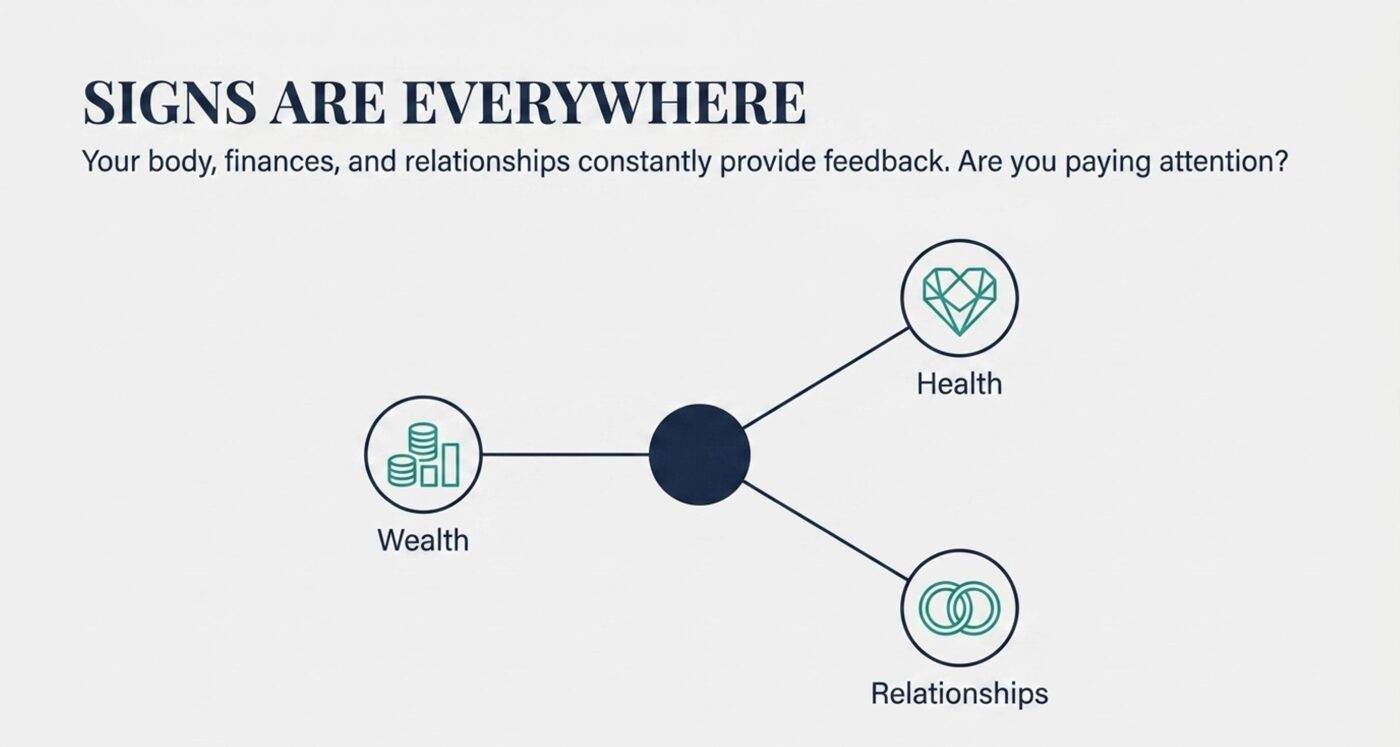
This week, the focus is on building the skill of reading signs properly. It breaks down into four stages:
1. Observation (Without Judgment)
Awareness always comes first. If you’re not even aware a sign exists, you have no chance of interpreting it correctly. This step is simply about noticing — no judgment, no story attached yet.
2. Interpretation
Once you’re aware, you need to interpret carefully. This is where an outside perspective becomes valuable — it’s very easy to misread your own signs because you’re too close to them.
3. Verification
Gather evidence before you act. This is what real accountability is about — not consequences, not carrot-and-stick, but keeping accurate records so you can look for genuine patterns. My weigh-in this morning was a single measurement. On its own, it doesn’t reflect my effort or my progress.
4. Response
Once you’ve verified the pattern is real, you respond accordingly. I’m not changing my plan because of one single weigh-in that went the wrong way. I’m sticking with what I know works.
Observation vs. Interpretation: Why We Get This Wrong
There’s an important distinction to understand here:
- Observation is what is actually happening — learning what to pay attention to.
- Interpretation is the meaning we assign to what’s happening.
Most of us aren’t even aware enough of the signs in the first place — we’re on autopilot, blind to the feedback coming back to us. And when we do notice something, we often don’t know how to interpret it correctly.
We rarely see signs objectively. We see them through the map we’re carrying — through past experience and confirmation bias, paying attention only to what we already believe rather than what’s actually happening in front of us.
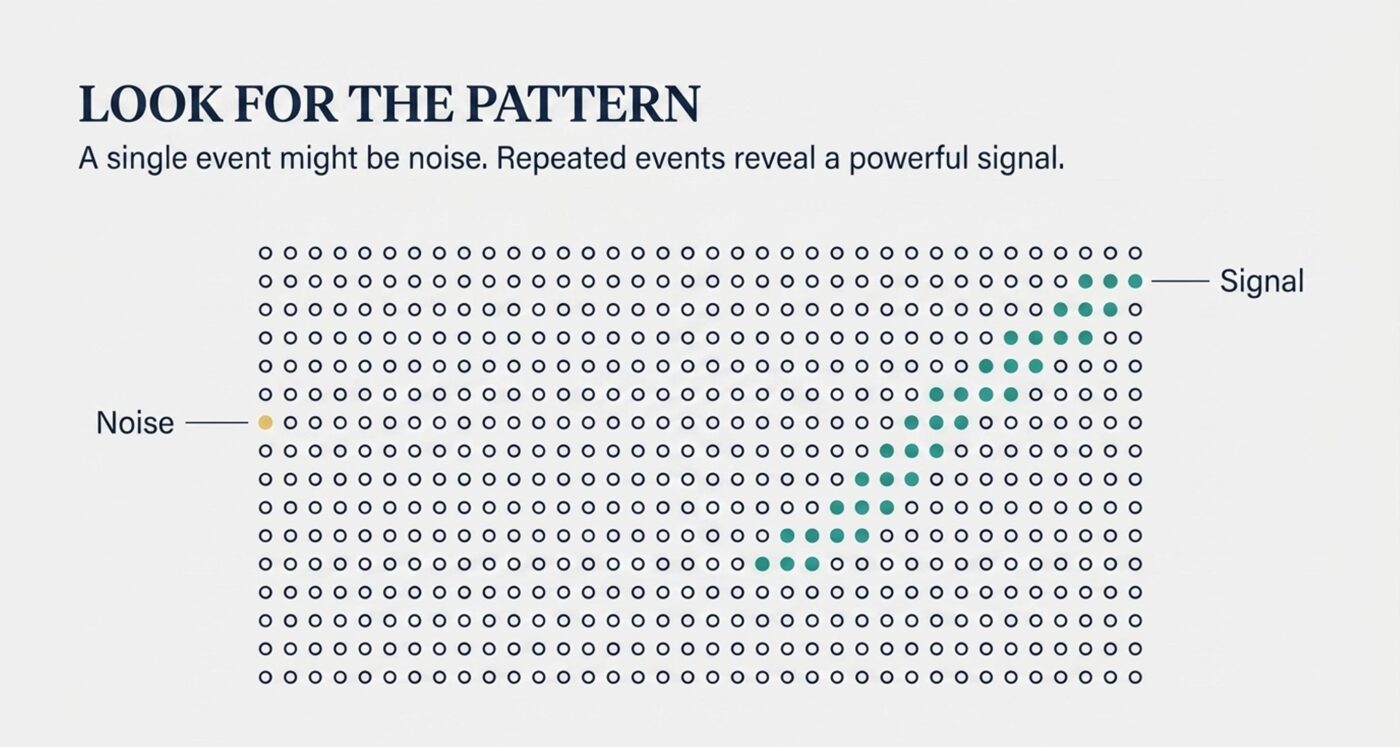
The key is looking for patterns, not single events. A single event might just be noise — background clutter. Repeated events reveal a powerful, genuine sign. That’s why it’s so important to measure over an extended period of time rather than reacting to any one moment.

Results, Consequences, and the Power of Belief
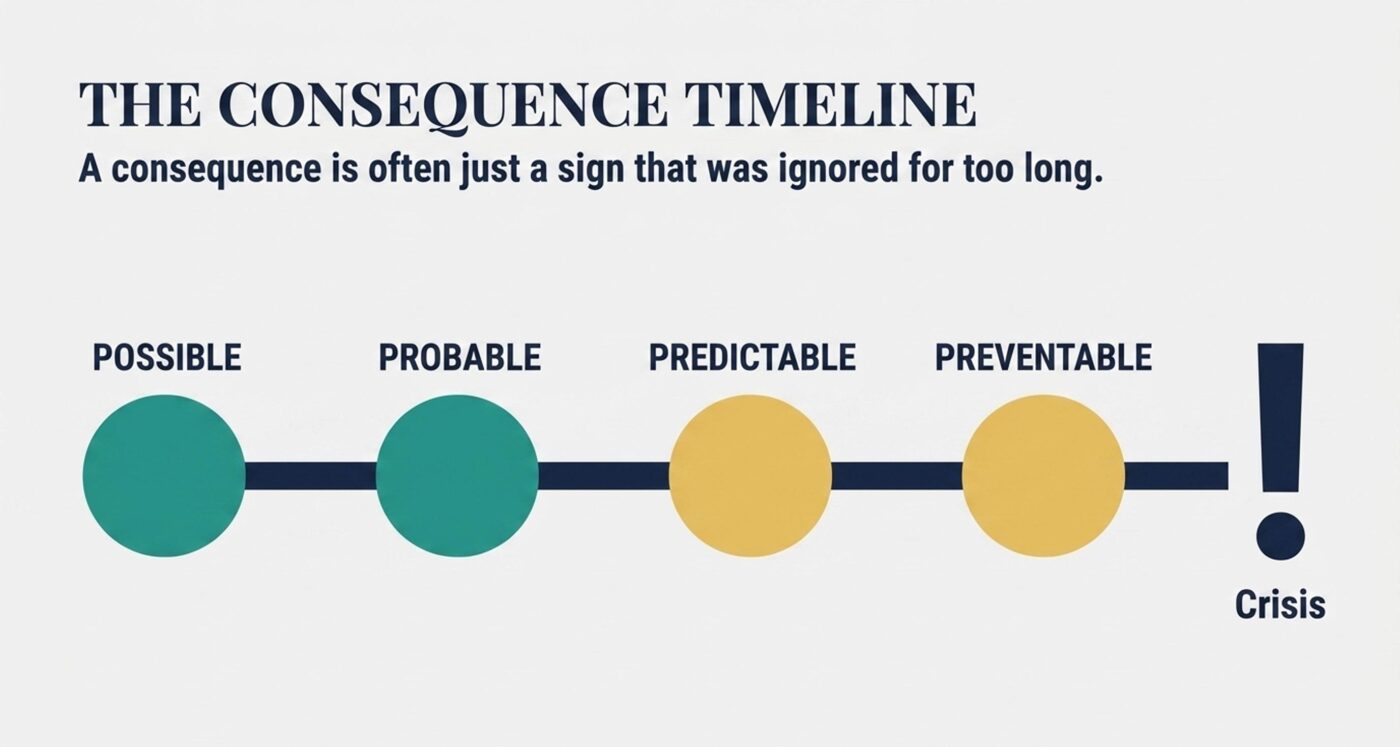
Results are what we desire. Consequences are what actually happens. Sometimes they match up — sometimes they don’t. And often, a consequence is simply a sign that was ignored for too long.
Everything moves through two stages: possibility, then probability.
- Is it possible for you to lose weight? To earn more money? To build good relationships?
- If you don’t believe in the possibility first, you’ve already shut yourself off from it.
- Once you believe in the possibility, you can look honestly at the probability — based on your current actions, is the result likely? And if you make changes, does that probability increase?
When you start making the right changes and doing the right things consistently, the results you want become far more predictable.
Why We Wait Until It’s Too Late
This shows up everywhere, but especially in relationships, health, and finances.
In relationships, the signs are usually there long before a breakdown — but one party doesn’t pay attention. By the time they do, it’s often too late for a simple fix, so they attempt what I call the “grand gesture” — trying to fix everything all at once, instead of addressing it early.
In health, weight doesn’t usually jump on suddenly. It creeps up a pound every few weeks — barely noticeable at the time. Then suddenly you’re a stone or two stone overweight, and you want to lose it all in four weeks. If small changes had been made along the way, it would never have built up in the first place.
In finances, it’s the same story. An extra £10 or £20 on the credit card doesn’t feel significant in the moment. But suddenly you’re £5,000 in debt, trying to fix it all in one go.
All of this is preventable if you start making small changes early.
That’s part of why I now post daily in the coaching and mentoring group — I’ve simplified the systems so people aren’t juggling multiple different groups, and there’s a single place to find information, alongside direct access to me via WhatsApp. But even with that access, nothing ever feels urgent enough in the moment:
- The red bill through the letterbox that needs paying
- The weight that’s crept up
- The friend you haven’t contacted because life’s been busy
And before you know it — the relationship has broken down, the debt has built up, the connection has faded.
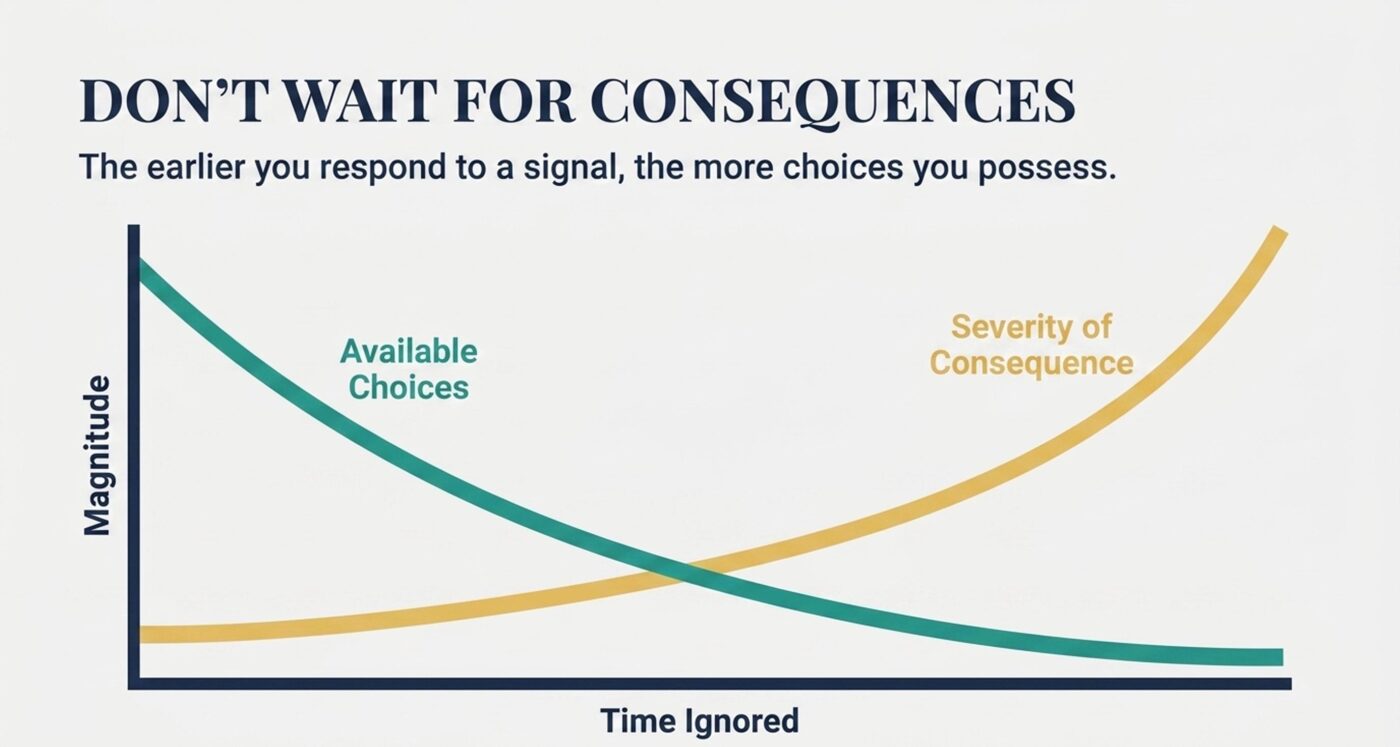
The earlier you respond to a signal, the more choices you have available. The longer you ignore it, the more severe the consequences become, and the fewer choices remain.
Update Your Map
If you’re in your thirties, forties, or fifties, ask yourself honestly: why are you still living life according to a map you drew as a teenager? Why are you still reacting out of things that happened to you twenty or thirty years ago?
We’re not in the same period of time. Technology has moved on. Time has moved on. Roads change. Traffic signals change.
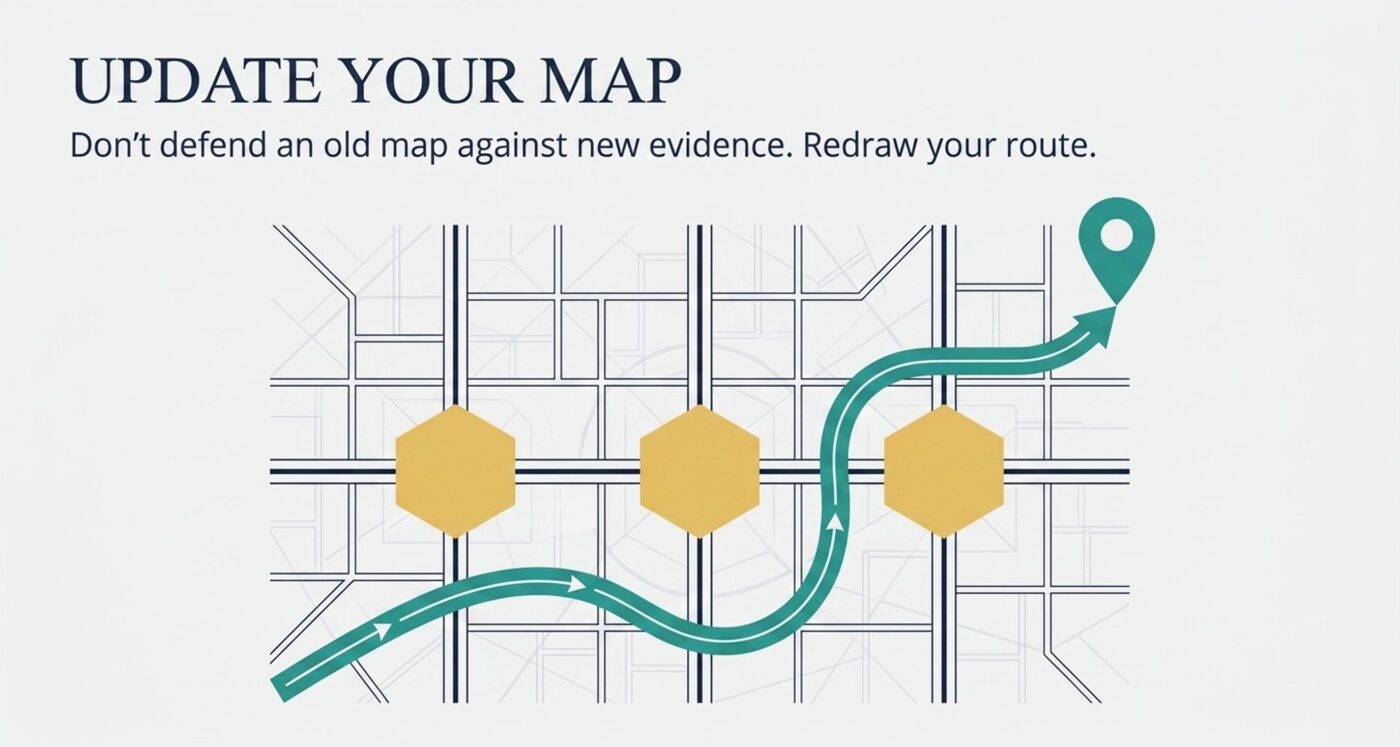
Don’t defend an old map against new evidence. Redraw your route.
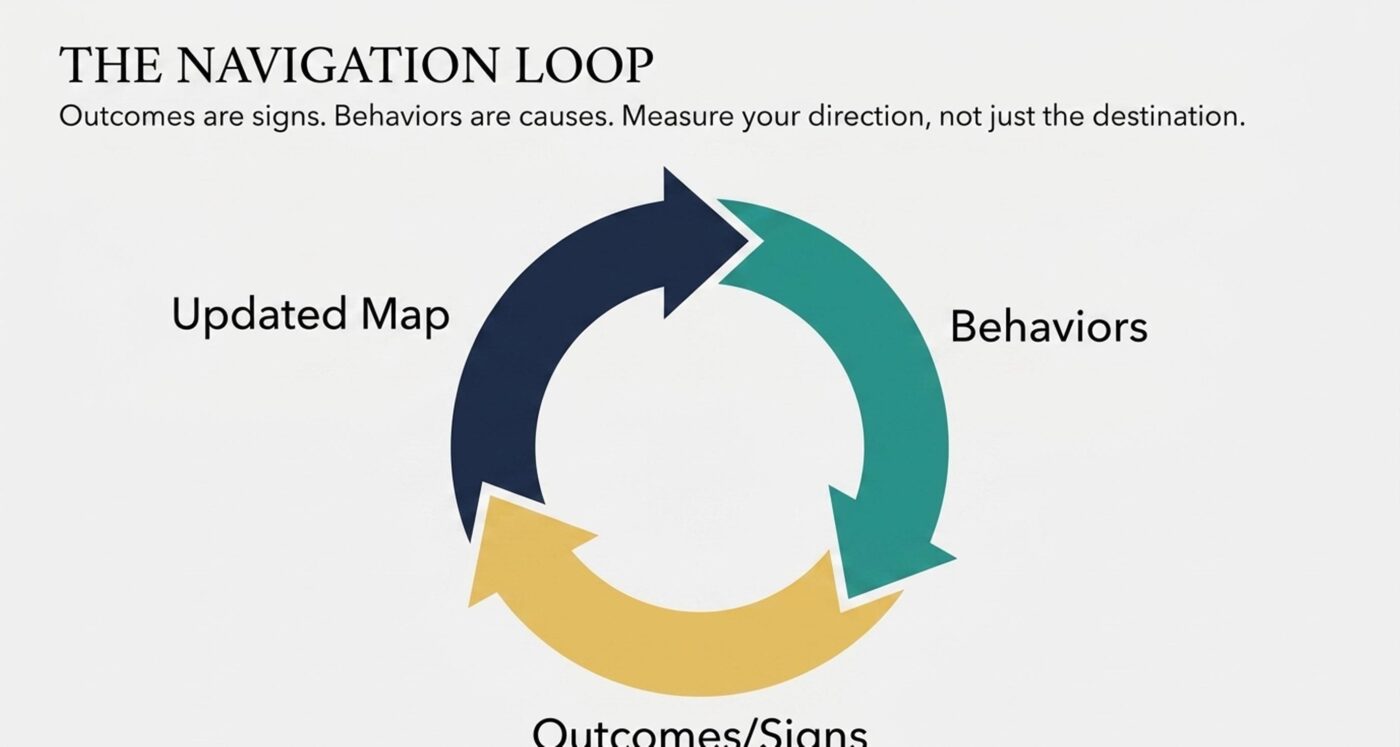
The Navigation Loop
- Outcomes are signs.
- Behaviors are causes.
- Measure your direction, not just your destination.
- Constantly update your map, your behaviors, and the signs you’re looking for
Bringing It Back to This Morning
I didn’t get the result I wanted on the scale this morning. But instead of letting that disappointment sit unused, it made me start paying attention to signs — and that thinking led directly to this week’s theme.
There’s always something good in it, if you’re willing to pay attention to the feedback you’re being given.
This Week’s Action Point
Pick one area of your life — health, wealth, or relationships.
- Identify one sign you’ve been ignoring.
- Get clear on what it actually means.
- Start with observation only — no judgment attached.
Don’t feel bad about having ignored it. Simply congratulate yourself for starting to pay attention now — then move forward into what you can actually do about it.
If you keep a journal, start tracking the signs that come through this week. In The Alchemist, the difference between someone who transforms their life and someone who doesn’t often comes down to one thing: awareness of the omens — the signals telling them it’s time to change.
Summary Table: The Sign-Reading Process
| Stage | What It Means | Key Question to Ask |
|---|---|---|
| Observation | Notice what’s happening, without judgment | What am I actually seeing, before I add a story to it? |
| Interpretation | Assign meaning carefully, ideally with outside perspective | What might this really mean — and am I seeing it through old bias? |
| Verification | Gather evidence and look for repeated patterns | Is this a single event (noise), or a genuine pattern (signal)? |
| Response | Take aligned action based on the verified pattern | What small, early adjustment can I make now? |
This week: start paying attention to the signs. Make a note of them. And remember — one sign is never the whole story.