
Newsletters
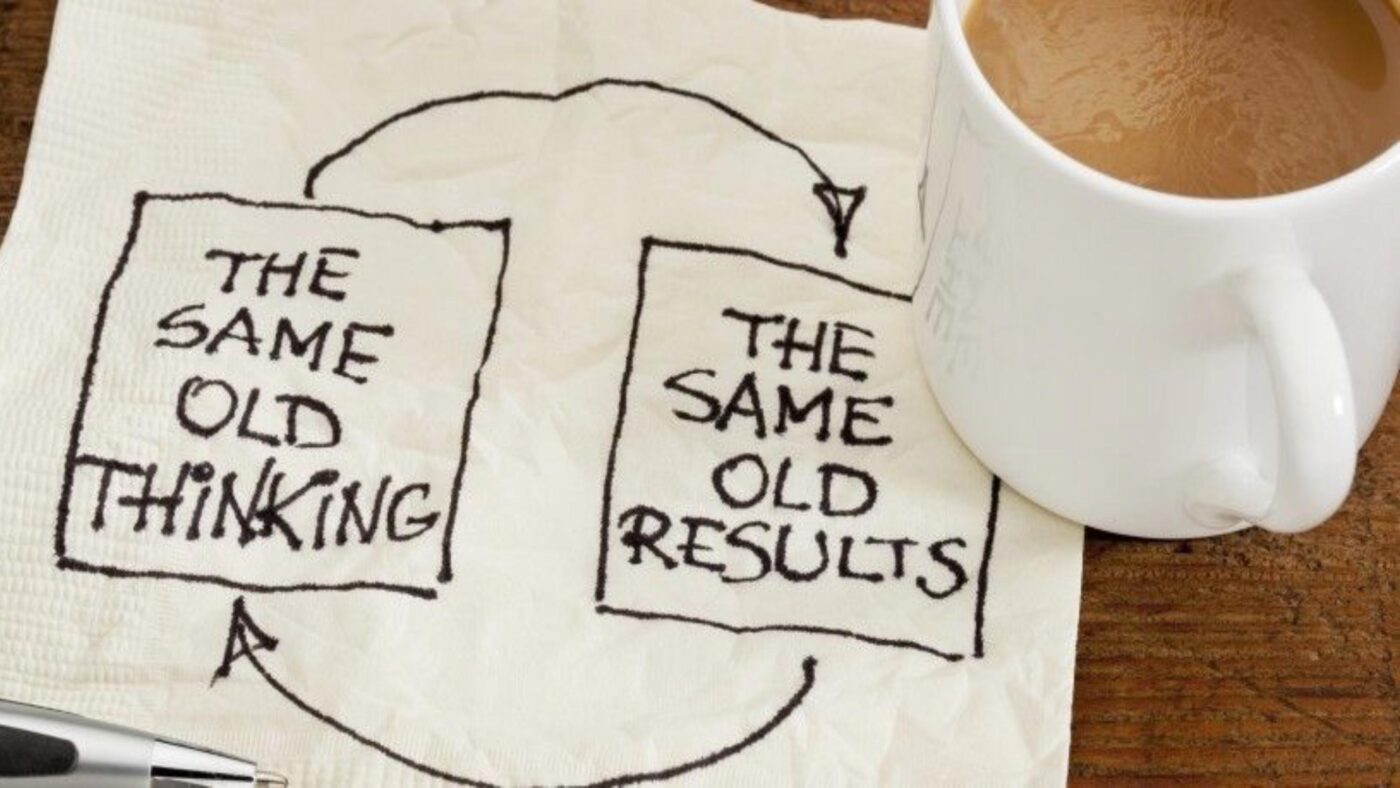
The Same Old Thinking Will Produce the Same Old Results
Weekly Coaching & Mentoring Newsletter — 27th July 2026
If you feel like you keep bumping up against the same walls in life — the same money worries, the same relationship friction, the same sense of “stuck” — it’s rarely bad luck. It’s usually a thinking pattern on repeat. And the honest, slightly uncomfortable truth is this: the same old thinking will produce the same old results.
This week’s theme kicks off something new: a weekly newsletter to accompany the coaching and mentoring sessions, breaking things down into short, digestible pieces you can actually use. The weekly live sessions themselves will return in September, but the ideas below are ones you can start applying today.
Why “Okay” Isn’t the Same as “Good”
There’s nothing wrong with just getting by for a while — short term, “okay” is a perfectly reasonable place to be. The danger is when “okay” quietly becomes the default setting for your whole life. This is what’s often called survival mode: you’re not in crisis, but you’re not thriving either. You’re just managing.
Here’s the thing — your life doesn’t have to just be okay. It can be good. It can be great. It can even be awesome. But that shift doesn’t happen by accident. It happens when you deliberately change your thinking.
Tool 1: Train Your Brain to Look for What You Want
Your brain has a built-in filter called the Reticular Activating System (RAS). Its job is to decide what information is important enough to bring to your conscious attention — and it takes its cues from whatever you focus on most.
That means:
- If you start each day and each week focused on problems, issues, and challenges, your brain assumes that’s what you want more of — and it will keep surfacing more of it.
- Fixating on what’s wrong in your relationships sets the standard for how those relationships play out.
- Constantly focusing on lacking money and struggling to pay bills tells your brain to keep proving you right — it will show you more evidence of scarcity.
The flip side is just as powerful. When you deliberately shift your attention toward abundance and toward what you actually want more of, your brain starts recognising opportunities aligned with that — and begins preparing you to act on them.
Action point: For the next week, notice where your attention naturally goes first thing in the morning. Is it toward problems or toward possibilities? Make a conscious choice to redirect it toward what you want more of, not what you want less of.

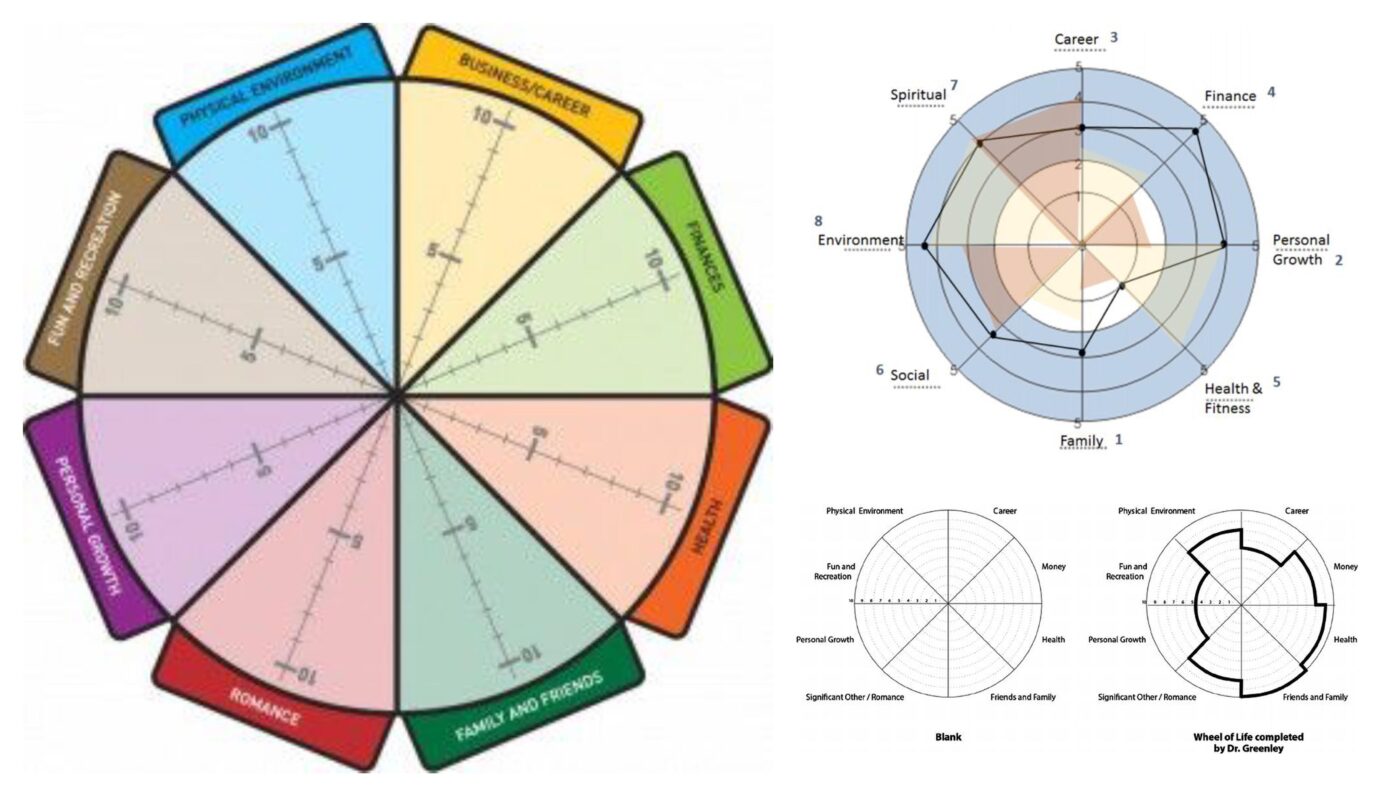
Tool 2: The Balance Wheel Exercise
A simple, ten-minute weekly exercise to get a clear snapshot of where you really stand.
How it works: Rate yourself from 0–10 across these life categories:
- Business / career
- Finances
- Health
- Family
- Friends
- Love / romance
- Personal growth
- Fun / recreation
- Physical environment
This isn’t a judgement tool — it’s a diagnostic tool. Think of it like taking a weekly photo of yourself on a weight-loss journey: on its own, one photo doesn’t tell you much, but a consistent weekly record shows you the real trend.
Why does this matter? Because we mostly respond to how we’re feeling in the moment, and then rationalise that feeling with logic afterward. Memory alone is unreliable — a regular, structured check-in cuts through that and gives you an honest baseline.
Action point: Score yourself across all eight categories once a week. If you keep a journal, add a short note beside each score explaining why you rated it that way. Over a few weeks, patterns will start to emerge.
Tool 3: The Weekly Objectives Plan
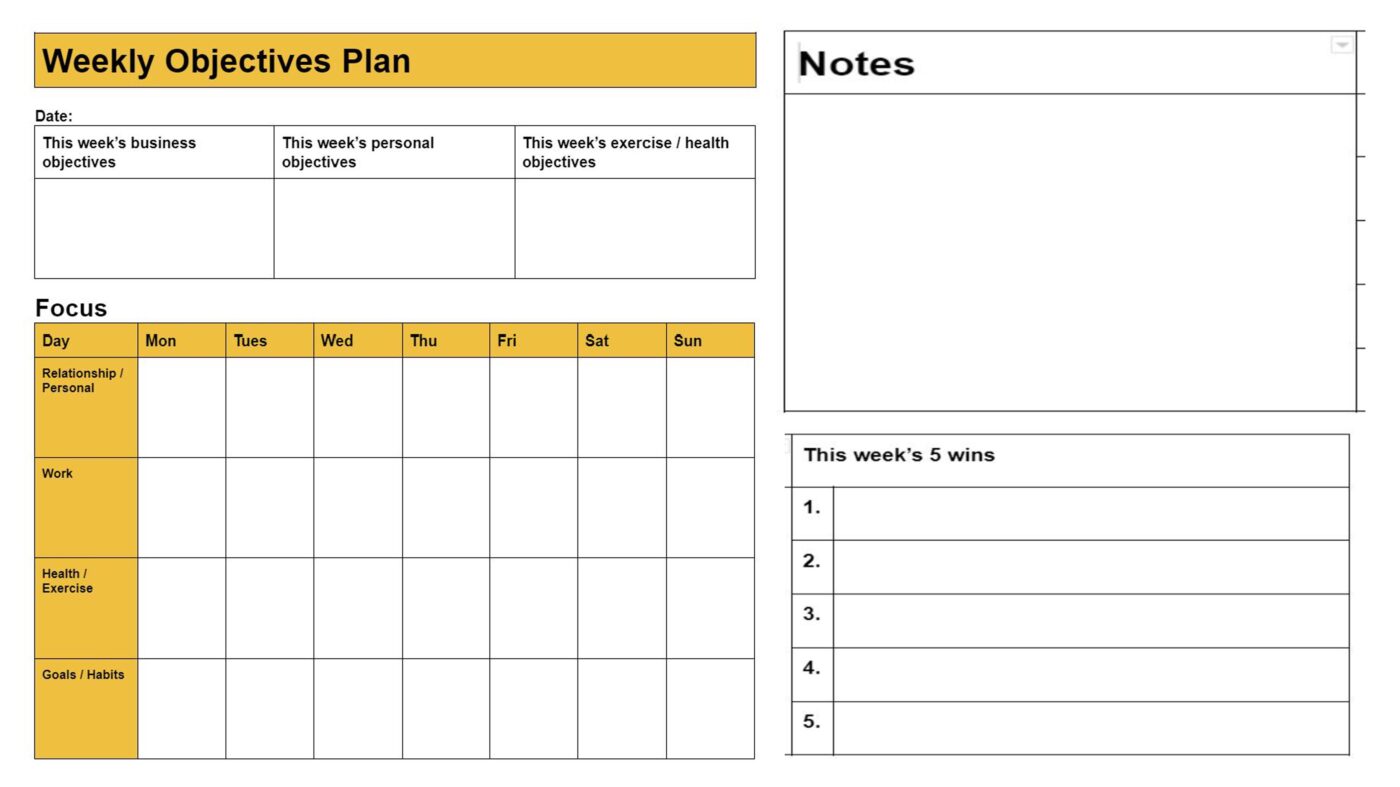
If your goal is to be more productive, more efficient, and more intentional with your attention, this simple planning grid helps enormously.
How to set it up:
- Create a grid with the days of the week across the top — Monday through Sunday.
- Down the side, set up rows for your key areas: business objectives, personal objectives, and health objectives (health should always be a priority — without it, everything else tends to collapse).
- For each day, write in one prioritised task per area.
- At the end of the week, record your wins — don’t skip this step.
Why the “wins” column matters: Focusing on what’s going well trains your attention (remember the RAS from Tool 1) to notice more of what’s working, which builds momentum rather than draining it.
Action point: Build your weekly objectives grid this Sunday or Monday morning, and block ten minutes at the end of the week to review it and log your wins.
Tool 4: Take Small Action, Today
Big goals are won through small, consistent actions — not grand gestures. The key question to ask yourself each day is simple:
“What is the one small thing I can do today?”
Not tomorrow. Not next week. Today.
Focusing on today keeps you anchored in the present, where actual traction and momentum are built. It’s easy to plan for “someday” — it’s far more powerful to identify one small, doable action and take it right now.
Action point: Each morning, write down one small action related to your current goal that you can complete that day. Nothing more is required to start building momentum.

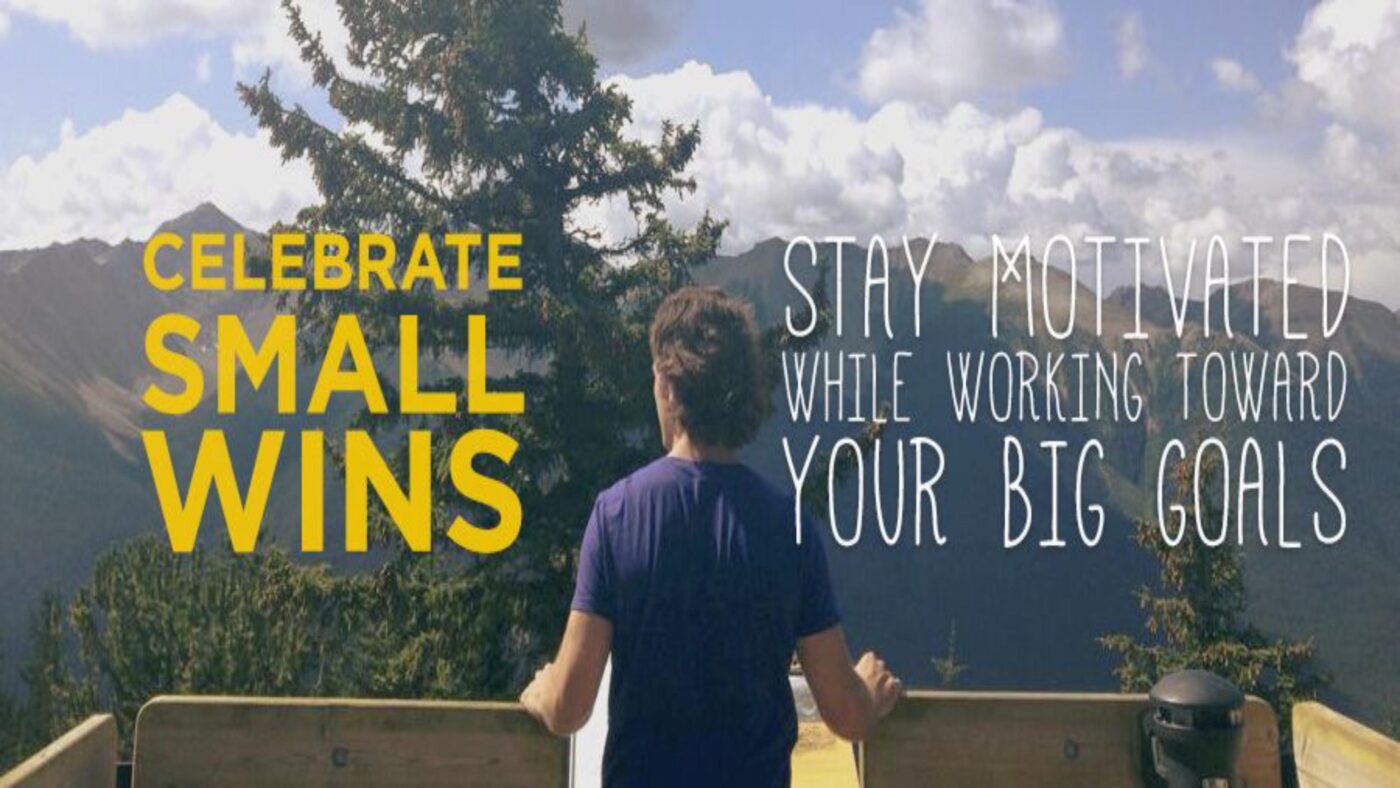
Don’t Underestimate the Power of Celebrating Small Wins
This might be the most overlooked piece of the puzzle. It’s tempting to brush past small wins because they feel like “only a small step” toward the bigger goal that’s still a long way off. But it’s precisely those small steps, celebrated and reinforced, that compound into big results.
There’s an unfortunate reality worth naming here too: in some environments, celebrating your own progress can be misread as a lack of humility, or it can trigger insecurity in other people. But celebrating wins isn’t about ego — it’s about staying motivated for the long haul.
The real solution is to surround yourself with cheerleaders — people who genuinely celebrate your progress with you — and to learn to become your own cheerleader as well.
Action point: At the end of each week, write down at least one small win — no matter how minor it feels — and actively acknowledge it. If you’re part of an accountability group, share it there.
Why Environment Matters
Changing deeply ingrained thinking patterns by yourself is genuinely difficult. It’s far easier — and far more sustainable — when you’re surrounded by people who are positive and uplifting, and who hold you accountable. This is exactly the purpose behind the coaching and mentoring sessions and the accompanying accountability group:
- Sessions provide structured space to challenge and reshape your thinking (returning in September).
- The accountability group provides ongoing follow-up between sessions — a place to journal, record progress, and share wins with people who are actually rooting for you.
Quick Recap: This Week’s Toolkit
| Tool | Purpose | Time Needed |
|---|---|---|
| Focus shift (RAS awareness) | Redirect attention toward what you want, not what you lack | Ongoing daily awareness |
| Balance Wheel | Weekly snapshot across 8 life categories | 10 minutes/week |
| Weekly Objectives Plan | Structure and prioritise business, personal, and health goals | 10–15 minutes/week |
| One Small Thing Today | Build momentum through daily micro-action | 2 minutes/day |
| Celebrate Small Wins | Sustain motivation over the long term | 5 minutes/week |
Final Thought
Changing your results starts with changing your thinking — and changing your thinking starts with small, repeatable habits, not one big overhaul. Try one or two of these tools this week and notice the difference.
Got questions or want to share how you’re getting on? Message me directly or drop a note in the Facebook coaching and mentoring group — I’d love to hear from you.
Take care, and I’ll be back next week with another theme.

Very interesting and true!
Balance wheel is useful
Very interesting and true!
Balance wheel is useful