By the time you’ve reached Module 4, you’ve already come face to face with the heart of avoidance:
You’ve understood what it is and how it operates (Module 1).
You’ve faced the costs — emotionally, financially, relationally, even spiritually (Module 2).
You’ve taken small, meaningful steps into action (Module 3).
Now comes the most important — and least glamorous — part of the journey: sustaining the change.
The truth is, transformation isn’t built in the breakthrough moment. It’s built in the thousand small, quiet acts that follow. What you do when no one is watching. What you do when the novelty has faded. What you do when life feels ordinary again.
That’s what this module is about. It’s not about dramatic action, but about the systematic architecture of sustained momentum.
Avoidance recovery isn’t a sprint — it’s an ongoing practice.
Part 1: Understanding Sustainability
1.1 The Psychology of Maintenance
Research shows that the majority of people who attempt to make behavioural changes — whether related to fitness, productivity, or personal development — revert to old patterns within 6 to 8 weeks. Why? Because we mistake motivation for momentum.
Motivation is emotional — it’s the initial spark that gets you started. Momentum is structural — it’s what keeps you going after the emotion has faded.
Sustainable practice, then, is not about feeling inspired every day. It’s about designing systems that make showing up easier than not showing up.
“We don’t rise to the level of our goals, we fall to the level of our systems.” — James Clear, Atomic Habits (2018)
1.2 The Three Pillars of Sustainable Growth
To move from short-term change to long-term identity, you need to anchor your growth in three interconnected pillars:
Structure — Routines, rituals, and visible systems that cue action.
Support — People, groups, or communities that mirror back your growth and hold you accountable.
Self-concept — An evolving identity that integrates action into who you are, not just what you do.
These pillars prevent regression by addressing the psychological and emotional needs that drive avoidance: fear, fatigue, and isolation.
Part 2: The Emotional Life Cycle of Change
2.1 The Dip After the High
Every transformation follows a predictable curve:
Excitement — The initial rush of clarity and purpose.
Resistance — Reality sets in; novelty fades.
Adjustment — You experiment with consistency.
Integration — Action becomes natural and embodied.
The critical juncture is between Resistance and Adjustment. This is when most people quit.
This “dip” is when your brain realises that the dopamine rewards of novelty are gone, and you must now rely on discipline, structure, and meaning to continue.
Avoidance is a natural temptation during this phase — it offers instant relief from discomfort. But this is also where the deepest identity work happens.
“Change isn’t difficult because of what it adds. It’s difficult because of what it threatens to remove — our familiar sense of self.” — Dr. Lisa Lahey, Immunity to Change (2009)
2.2 The Role of Emotional Endurance
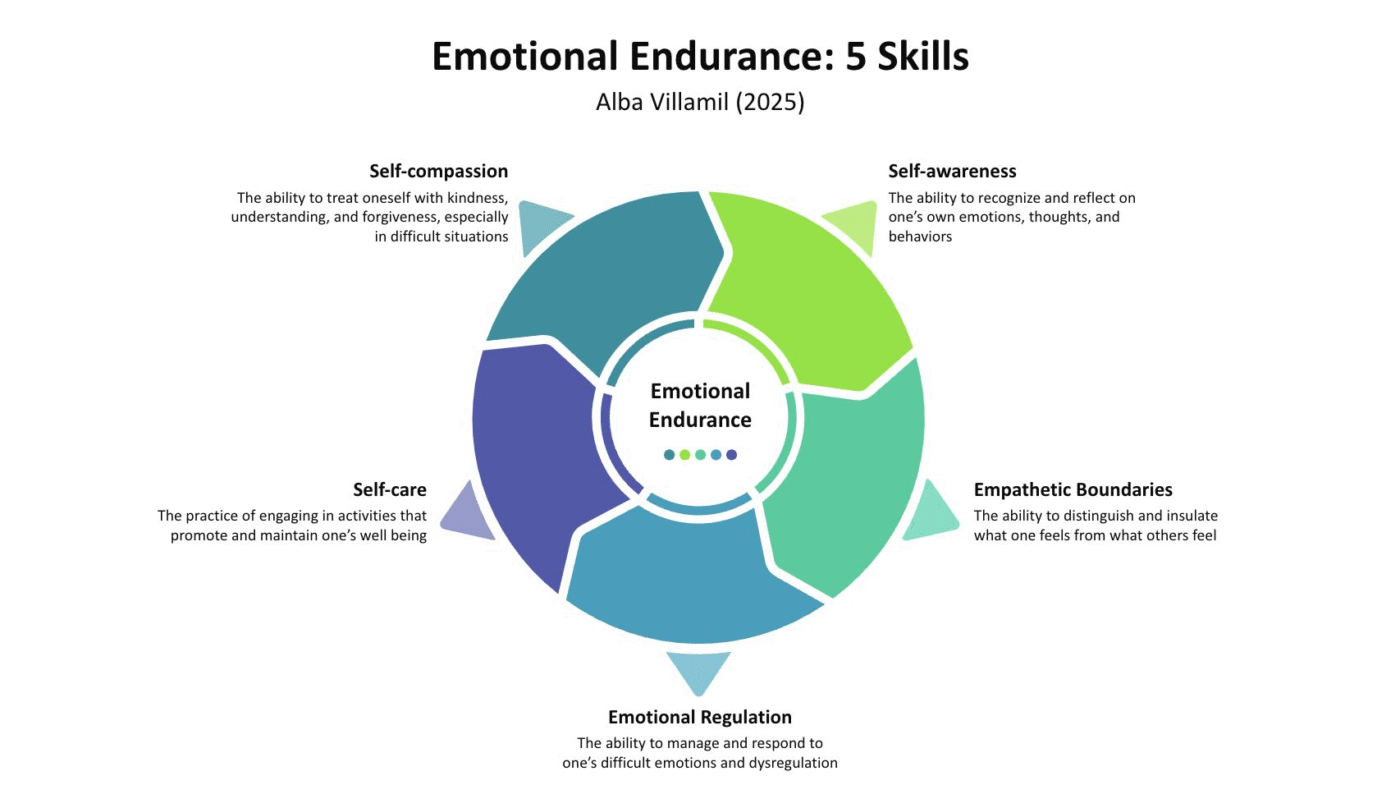
Building sustainability requires what psychologists call emotional endurance — the capacity to remain in contact with discomfort without shutting down or withdrawing. This is not willpower. It’s emotional literacy.
You learn to:
Sit with frustration without quitting.
Hold boredom without seeking novelty.
Tolerate uncertainty without distraction.
Each of these is an act of self-trust. The more often you practice, the more naturally you move from reactive avoidance to proactive engagement.
Part 3: From Action to Identity
3.1 Identity-Based Change
In Modules 1–3, you focused on what you do. Now, we turn to who you are becoming.
Avoidance thrives when your actions are inconsistent with your identity. If you see yourself as “someone who struggles to finish things,” your brain unconsciously seeks to confirm that story. Sustainable change comes from shifting the self-concept.
Instead of saying:
“I’m trying to stop avoiding things.” You say: “I’m becoming someone who shows up.”
This subtle linguistic shift is powerful. It recodes your self-narrative.
Identity-based habits work because they engage intrinsic motivation — action that aligns with your sense of self rather than external outcomes.
3.2 The Self-Image Loop
Your identity and behaviour exist in a reinforcing loop:
Every time you take a small step toward action, you produce evidence that supports a new identity. Over time, those small confirmations override old stories of avoidance.
“The process of building habits is actually the process of becoming yourself.” — James Clear, 2018
Part 4: Building Accountability Systems
4.1 Why Accountability Works
Accountability transforms intention into behaviour. When your commitments exist only in your mind, they remain abstract. When they exist in a social space — shared with others — they become real.
Studies in behavioural psychology show that people are 65–75% more likely to follow through on an action when they report progress to another person (American Society of Training and Development, 2010).
4.2 Forms of Accountability
There are several layers of accountability you can implement:
Peer Accountability (Horizontal)
Partner with a friend or group member.
Check in weekly: “What did you say you’d do? What actually happened?”
Public Accountability (Social)
Post progress updates in the WhatsApp group or on social media.
Celebrate completion — not perfection.
Internal Accountability (Reflective)
Maintain a journal of commitments and outcomes.
Ask: “What helped me show up this week? What hindered me?”
Mentor or Coach Accountability (Vertical)
Engage with someone who has perspective and structure.
Use their guidance to refine your system and mindset.
Step 2: Celebration (5 minutes) Write one line beginning with:
“This week, I showed up by…”
Acknowledge effort over outcome. Small celebrations anchor motivation and give your brain dopamine reinforcement for consistency rather than novelty.
Step 3: Reset for Next Week Set 1–2 realistic actions. Too many goals fragment focus — aim for repeatable momentum.
5.2 Exercise 2: Creating Your Personal Avoidance Action Plan (7 Days)
This plan transforms the course into a lifestyle practice.
Step 1: Choose One Domain Select one area (health, money, relationships, opportunities) that most impacts your long-term well-being.
Step 2: Define Your North Star Goal Example:
Health: “I want to build the habit of daily movement.”
Money: “I want to clear £1,000 of debt.”
Relationships: “I want to repair communication with my sister.”
Step 3: Break It Down into Milestones Foundation: Build awareness and consistency. Expansion: Add supportive habits and routines. Integration: Reflect, refine, and anchor the new behaviour.
Step 4: Identify Avoidance Triggers What fears, thoughts, or contexts make you withdraw? Name them in advance to disarm them.
Step 5: Accountability & Environment Design
Pair with a buddy.
Share updates daily.
Adjust your environment to make the desired action easier (e.g., set reminders, remove distractions).
Step 6: Review & Reward Celebrate small wins publicly or privately. Recognition builds identity reinforcement.
Part 6: Sustaining the System
6.1 Community as a Stabiliser
Sustainability thrives in community. Avoidance is an isolating behaviour — community reintroduces collective energy.
Ways to build community involvement:
Join the weekly accountability circles or study groups.
Post updates or reflections in the WhatsApp group.
Offer feedback to others; giving support strengthens your own commitment.
When you share your process, you’re no longer “doing self-improvement” — you’re living transformation in relationship.
6.2 Building Rhythms, Not Routines
Rigid routines often fail because they ignore life’s natural ebbs and flows. Instead, create rhythms — flexible, recurring cycles that adapt but never disappear.
For example:
Morning rhythm: 5 minutes of journaling and intention-setting.
Weekly rhythm: Sunday evening reflection.
Monthly rhythm: Review your Avoidance Action Plan and celebrate progress.
Rhythms align with human biology — we are cyclical creatures, not machines.
Part 7: The Mundanity of Mastery
7.1 Why Boring Consistency Wins
The world celebrates peaks — breakthroughs, achievements, moments of triumph. But true transformation happens in the plateaus.
“The greatest performers in any field aren’t more talented — they’re more consistent. They embrace the boring.” — Daniel Chambliss, The Mundanity of Excellence (1989)
In his research on Olympic swimmers, Chambliss discovered that elite athletes weren’t driven by grand goals but by a love for precision in the small, repetitive details of practice.
That’s the real work of avoidance recovery — loving the repetition.
7.2 Boredom as a Threshold
Boredom is not a sign that something is wrong. It’s a sign that you’re stabilising into mastery. When things feel repetitive, ask:
“What am I refining right now?”
“How can I deepen the quality of this repetition?”
Instead of seeking novelty, seek depth. That’s the mindset shift from avoidance to sustainable excellence.
Part 8: Reflection and Integration
Reflection Prompts
What small behaviours now define the new version of you?
How does it feel to think of yourself as “someone who shows up”?
Which rhythms, rituals, or communities help you sustain progress?
What might you need to release to continue forward momentum?
Write freely for 10–15 minutes. Integration is less about insight and more about embodiment.
Outcome of Module 4
By the end of this module, you should be able to: ✅ Design a sustainable weekly structure that supports ongoing growth ✅ Identify the emotional and environmental triggers of relapse ✅ Anchor your actions in a new identity ✅ Engage in consistent accountability practices ✅ Develop a personal 90-day plan to keep momentum alive
This is not the end of your avoidance work — it’s the beginning of your lifelong practice.
Bibliography & Research References
Chambliss, D. (1989). The Mundanity of Excellence: An Ethnographic Report on Stratification and Olympic Swimmers. Sociological Theory, 7(1), 70–86.
Clear, J. (2018). Atomic Habits: An Easy & Proven Way to Build Good Habits & Break Bad Ones. Penguin Random House.
Lahey, L. & Kegan, R. (2009). Immunity to Change: How to Overcome It and Unlock the Potential in Yourself and Your Organization. Harvard Business Press.
Duckworth, A. (2016). Grit: The Power of Passion and Perseverance. Scribner.
Duhigg, C. (2012). The Power of Habit: Why We Do What We Do in Life and Business. Random House.
American Society of Training and Development (ASTD) (2010). Accountability Research Report.
Ryan, R. & Deci, E. (2000). Self-Determination Theory and the Facilitation of Intrinsic Motivation, Social Development, and Well-Being. American Psychologist, 55(1), 68–78.